



The history of Matlacha
Matlacha, pronounced Mat-la-SHAY.
Calusa waters, a bridge built on dredged shell, and a fishing village that painted itself.
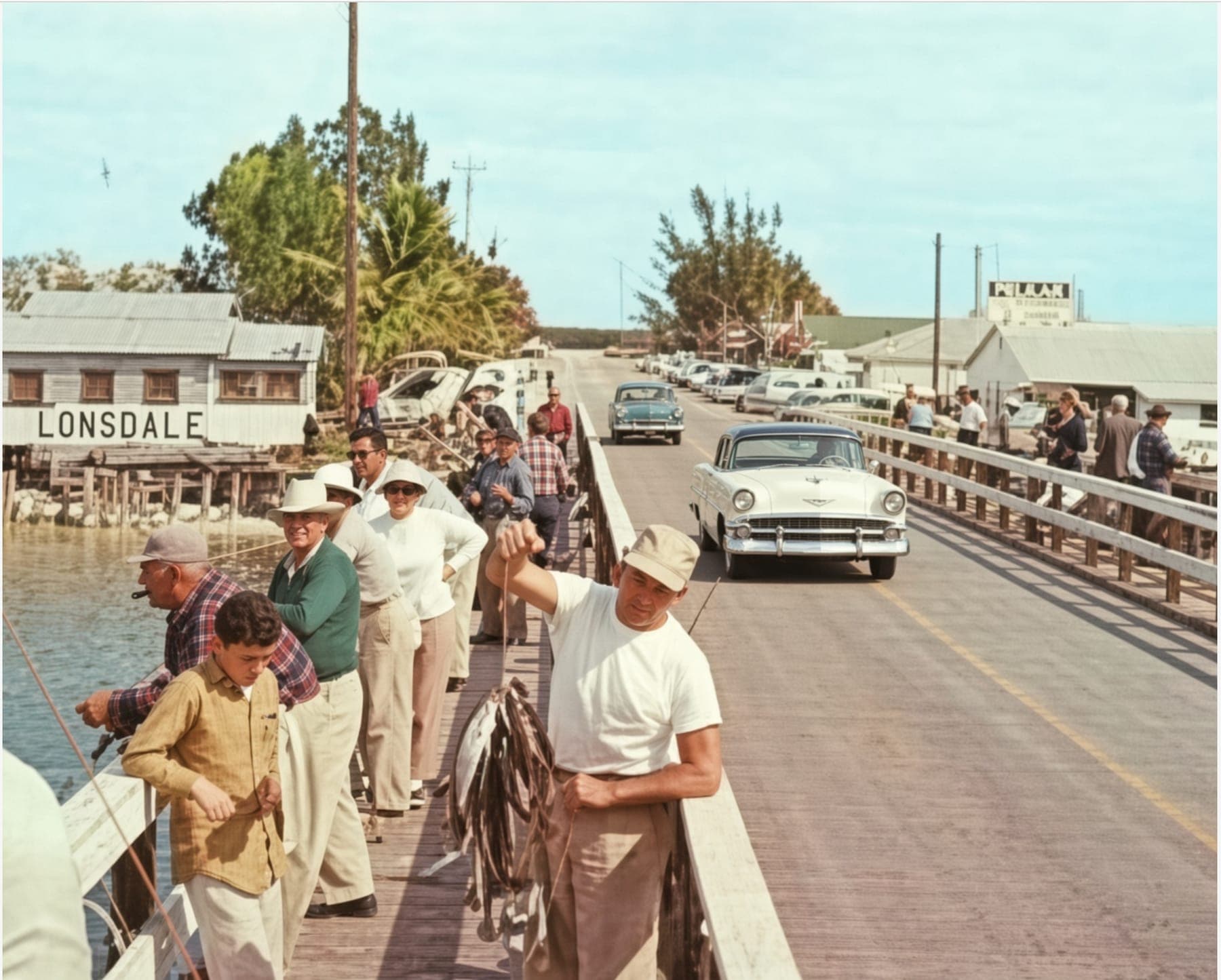
- Long before
Calusa country.
Long before modern settlement, the broader Pine Island and Matlacha Pass region was home to the Calusa people, sophisticated coastal dwellers known for their fishing expertise, shell mounds, and engineered canals.
Many people believe the name comes from the Calusa and means “water to the knees.” Other theories propose “water to the chin,” “defender,” or “warrior’s assistant,” and some Calusa scholars dispute the “water to the knees” explanation. Historical texts from around 1844 mention a place called “Metal Achee” in the area. In the 1880s the vicinity was sometimes called Harsonville, after an early settler and unofficial postman named Harson.
Whatever its roots, the unusual pronunciation has stuck, adding to the community’s distinctive character.
- Before the 1920s
An island apart.
Before the 1920s, Matlacha and Pine Island were isolated. Farmers carried their produce by mule- or ox-drawn wagon to St. James City, then by steamboat to Fort Myers. At low tide, people could even wade across parts of Matlacha Pass.
- 1925 to 1927
A bridge, and the land it made.
Matlacha as we know it began in the mid-1920s, thanks to the determination of Pine Island resident Harry Stringfellow. A Lee County commissioner from 1926 to 1953, Stringfellow was frustrated by the long trips to mainland meetings and pushed hard for a permanent connection.
In 1925 and 1926, Lee County acquired a recycled one-lane wooden swing bridge from Alva, originally built in 1903 over the Caloosahatchee River, and barged it into Matlacha Pass. Workers dredged shell and sand from the pass, an estimated two miles of hydraulic fill, to build a causeway, enlarge the mangrove islands, and create the approaches. The work literally made new high-and-dry land.
A September 1926 hurricane destroyed the nearly finished bridge. Undeterred, crews rebuilt it, and the wooden swing bridge opened to traffic in 1927. The new land was often simply called “The Fill.”
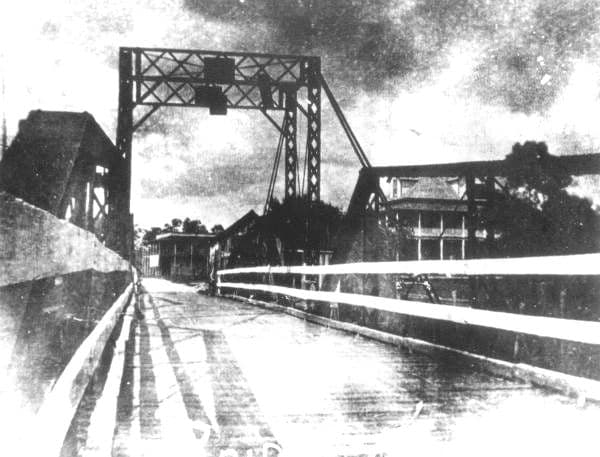
The old wooden swing bridge. - 1927 to the 1930s
The first settlers.
Almost as soon as the bridge opened, settlers arrived. Ed Young, the first bridge tender, and his family became the earliest residents, camping on the shell fill. George and Kay Kuhns from Buffalo soon joined them.
As the Great Depression took hold after 1929, more refugees arrived, living at first in cars and tents before building shacks, shanties, and stilt houses.
- 1927 to today
The fishingest bridge in the world.
The early bridge quickly became a dual-purpose structure: a vital link for farmers shipping produce, and a magnet for anglers. Fishermen lined its rails so consistently that it earned the enduring nickname “the fishingest bridge in the world.”
In 1968 the wooden span gave way to a two-lane concrete bascule drawbridge. The current bridge, an arcing, sturdier single-leaf bascule, opened on November 18, 2012, at a cost of around $20 million. Its predecessor was later sunk as an artificial reef off Charlotte County.
- 1995
The gill-net ban and the arts renaissance.
The community faced a major turning point in the mid-1990s. Florida’s 1994 gill-net ban, which took effect in 1995, hit commercial fishing hard and forced many third- and fourth-generation fishing families out of business. Some fishermen even burned their boats in protest.
What could have been the end became a rebirth. Affordable former fishermen’s cottages drew writers, artists, and creative types looking for an affordable island paradise. Residents painted the wooden homes and shops in bright Caribbean colors (turquoise, pink, yellow, lavender) to catch the eye of travelers heading to Pine Island. Galleries, restaurants, and quirky shops flourished, turning Matlacha into an artsy, funky destination often compared to a miniature Key West.
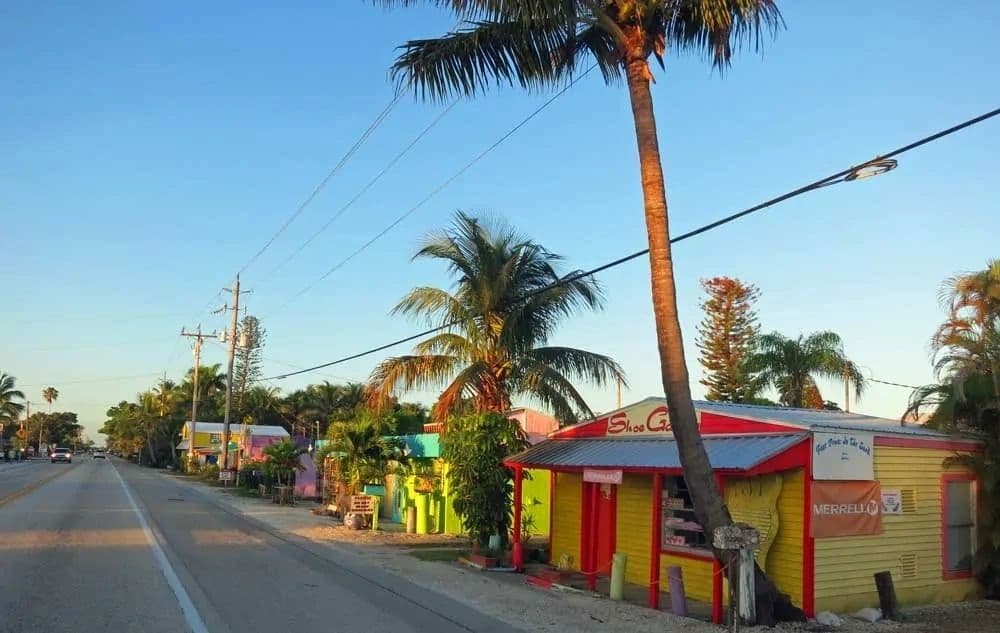
Painted shops on Pine Island Road. - Today
Visiting Matlacha today.
Much of Matlacha is now a designated historic district. To see this unique community firsthand, approach from Cape Coral on Pine Island Road, or come by boat and tie up at Miceli’s or Yucatan. Expect the occasional drawbridge opening (when the bridge is operating) to pause traffic briefly, so plan accordingly, especially at peak tourist times. Parking is at a premium, so arriving by boat or ride share is highly encouraged.
Matlacha offers a charming, walkable atmosphere with brightly painted buildings, art galleries, waterfront restaurants, and shops. Stop for fresh seafood, browse local art, or simply enjoy the island-time vibe. Nearby Matlacha Community Park has more fishing piers, boat ramps, and room to play.
The surrounding Matlacha Pass Aquatic Preserve protects the shallow, productive waters that make the area ideal for kayaking, bird watching, and wildlife viewing. Dolphins, manatees, and birds are everywhere.
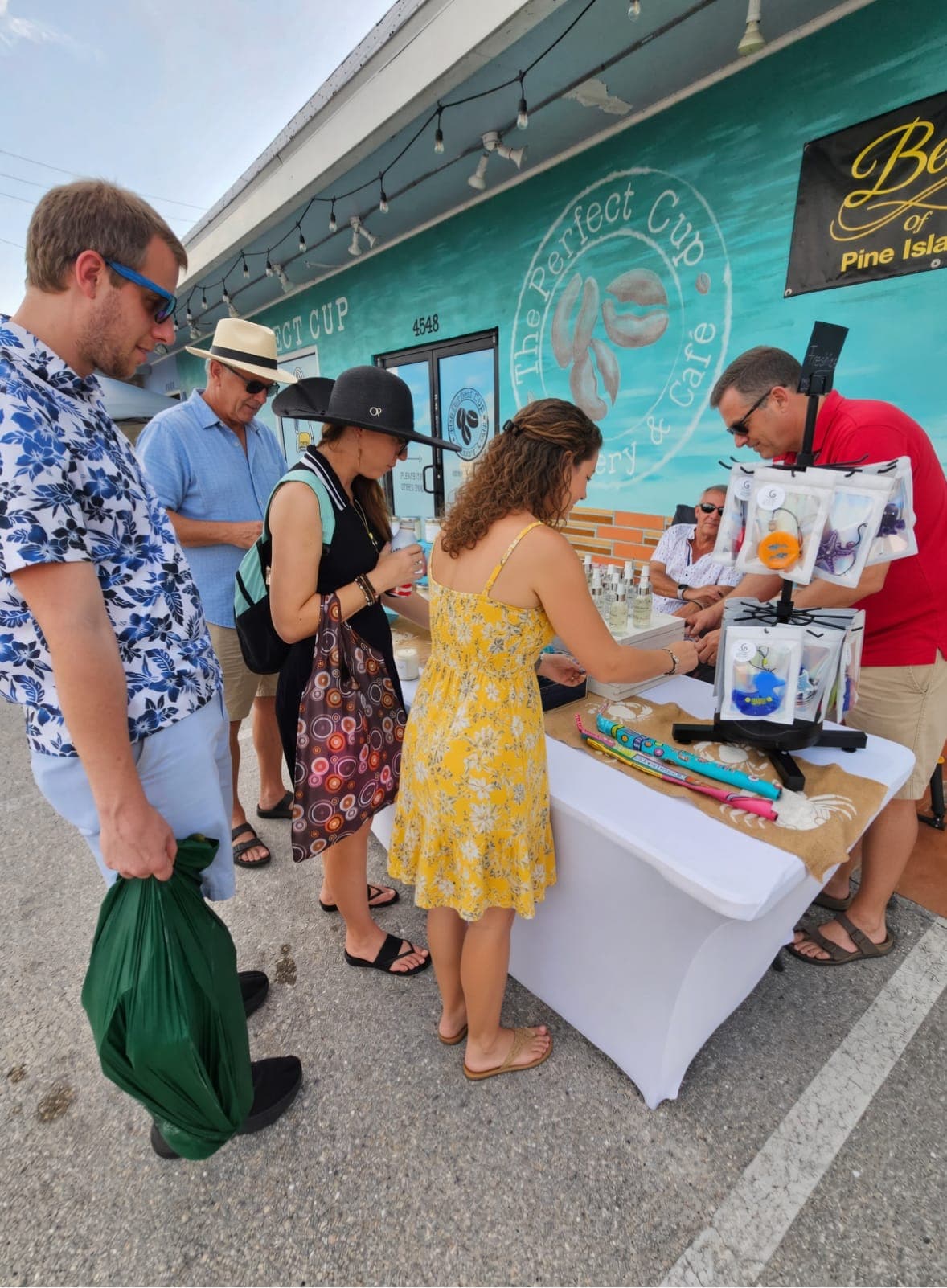
Browsing outside the Perfect Cup. Photo: Carol Scott, Matlacha Civic Association
Help write the next chapter.
The civic association has spoken for the island since 1981. $15 a year keeps it going.